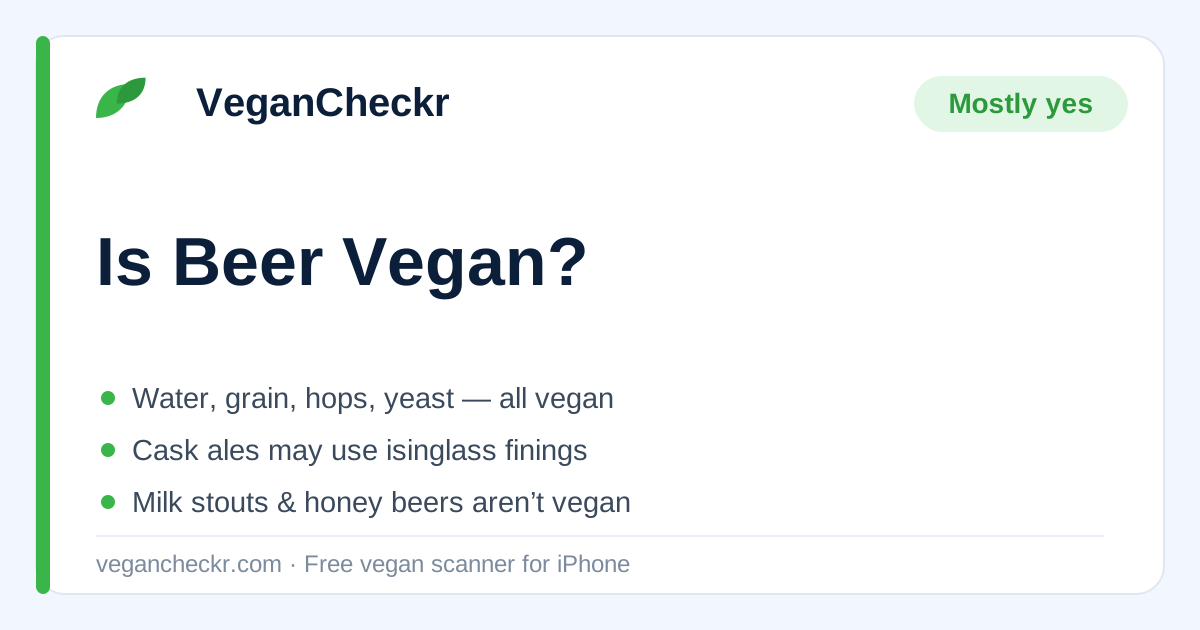
✓ Usually vegan Most beer is vegan: water, malted grain, hops and yeast contain nothing animal-derived. The exceptions are cask ales cleared with isinglass (a fish by-product), beers brewed with lactose (milk sugar) or honey, and the odd oyster stout — and the biggest offender never appears on the label.
That label gap is what makes this question harder than it should be. A fish-fined bitter and a fully vegan pilsner can carry identical packaging, because alcohol is exempt from most ingredient-labelling rules. Here's exactly where the animal ingredients hide, which styles carry real risk in 2026, and how to check any beer before you buy it.
What beer is made of (and why the basics are vegan)
At its core, beer is four ingredients: water, malted grain (usually barley or wheat), hops and yeast. All four are vegan. Yeast is a fungus, not an animal — it has no nervous system, and no mainstream vegan organisation considers it off-limits.
Germany's famous purity law makes this official. The Reinheitsgebot, first set down in Bavaria in 1516, restricted beer to water, barley and hops; its modern form adds yeast, which early brewers used without naming. German brewers still advertise compliance on the label, which is why a Reinheitsgebot lager is about the safest beer a vegan can order.
So if the recipe is inherently vegan, where does the animal content come from? Two places: what brewers add for flavour, and what they use to clear the finished beer.
Isinglass: the fish ingredient that never makes the label
Isinglass is a form of collagen extracted from the dried swim bladders of fish. Brewers have used it since the late 1700s as a fining agent: stirred into a cask, it binds to the suspended yeast and drags it to the bottom as a jelly-like sediment, leaving the beer bright and clear in days rather than weeks. The finings mostly settle out with the yeast, but trace residues can carry over into the glass — and either way, a fish product was used to make the beer, which rules it out for most vegans.
The style most affected is traditional cask-conditioned ale — the hand-pulled "real ale" served in UK pubs. Cask beer finishes fermenting in the cellar, so it needs clearing quickly, and isinglass has been the default tool for two centuries. A growing number of breweries now sell their cask beer unfined (expect a slight haze) or use vegan alternatives like Irish moss (a seaweed-derived carrageenan) and silica-based finings, but you can't tell from the pump clip alone. Wine has the same problem with its own set of fining agents — we've covered that in Is Wine Vegan?
Here's the frustrating part: none of this has to be declared. Under Regulation (EU) No 1169/2011, drinks over 1.2% alcohol are exempt from the mandatory ingredients list, and Annex II of the same regulation specifically excepts "fish gelatine or isinglass used as fining agent in beer and wine" from allergen declaration. US beer labels generally aren't required to carry an ingredients list either. A beer clarified with fish can be labelled exactly like one that never touched an animal product.
The beer itself is almost always vegan. It's what the brewer does to clear it — and what they add to sweeten it — that you need to check.
Lactose, honey and other animal ingredients in beer
Finings are a process problem. These are recipe problems — and unlike isinglass, they usually do show up on the label, because milk is a declarable allergen even on alcohol.
Lactose is milk sugar, and it's having a moment. Brewer's yeast can't ferment it, so it survives into the finished beer as sweetness and body. It's the defining ingredient of milk stout, and the craft trend of the past decade has spread it into pastry stouts, milkshake IPAs and fruited "smoothie" sours. If a beer's name includes "milk", "milkshake" or "pastry", assume lactose until proven otherwise.
Honey appears in honey ales, braggots and some seasonal specials. Like all bee products, it isn't vegan — the full reasoning is in our honey guide.
Oyster stout sometimes means exactly what it says: some are brewed with real oysters or oyster shells, while others just borrow the name. Ask the brewery. Gelatin, another animal-derived fining, turns up in homebrew and at some smaller breweries as an isinglass substitute — same problem, different animal. These join a long list of hidden animal ingredients that food and drink makers rarely spell out.
 Check it in seconds with VeganCheckr
Lactose and honey do appear on the label — if you spot them. Let the scanner read it for you:
- Open VeganCheckr and tap Scan, then point your camera at the barcode on the can or bottle.
- Read the verdict — declared animal ingredients like lactose or honey are flagged with the evidence shown.
- Add an avoidance alert for lactose so any beer containing it gets flagged instantly on every future scan.
Beer styles compared: where the vegan risk is
Style is your best first filter. It won't replace checking the specific beer, but it tells you how suspicious to be.
| Beer style | Typical vegan status | What to check |
|---|---|---|
| German lager (Reinheitsgebot) | Almost always vegan | Water, malt, hops and yeast only |
| Mass-market lager / pilsner | Usually vegan | Typically filtered, not fined — confirm the brand |
| Craft keg or canned beer | Usually vegan | Occasional lactose or gelatin — check the brewery |
| Cask ale / real ale (UK) | Often not vegan | Isinglass finings — ask if it's unfined |
| Milk stout / pastry stout | Not vegan | Lactose is the defining ingredient |
| Milkshake IPA / smoothie sour | Often not vegan | Lactose is common — read the label |
| Honey beer / braggot | Not vegan | Honey is in the recipe |
| Oyster stout | Often not vegan | Some use real oysters, some only the name |
Which beers are usually vegan in 2026
The good news: the trend line points firmly in vegans' favour. Large-scale lagers are typically clarified by sterile filtration or centrifuge — no animal products involved — which covers most of what's in the supermarket fridge. German beers brewed to the purity law are safe almost by definition.
The most famous convert is Guinness. After more than two centuries of isinglass, the brewery announced in 2015 that it would drop the fish-derived finings, rolled out a new filtration system, and completed the switch across draught, bottles and cans by 2018. The full story — including what changed and what to check when you order — is in Is Guinness Vegan?
Craft breweries have followed, partly because unfined, hazy beer became fashionable in its own right. Many now print "vegan-friendly" on the can or answer the question directly in their website FAQ. The holdout is traditional cask ale, where isinglass remains common — if you drink real ale in the UK, "is this one unfined?" is still a question worth asking at the bar.
How to check whether any beer is vegan
Because the label won't warn you about finings, a reliable check combines four steps.
1. Read what is on the label. Lactose, honey and milk allergen warnings are your fast disqualifiers. A printed Reinheitsgebot claim, a vegan trademark or a "suitable for vegans" line are your fast green lights. Our guide to reading food labels as a vegan covers the patterns worth memorising.
2. Look the brand up on Barnivore. Barnivore is a long-running community directory of the vegan status of beer, wine and spirits, built on direct answers from the companies themselves. It's the closest thing to a definitive registry of who fines with what.
3. Ask the brewery. For anything obscure or brand new, breweries almost always answer the finings question by email or social media — most craft brewers are asked it weekly.
4. Scan everything with ingredients. For the label side of the problem — lactose, honey, E-numbers and every other declared ingredient — a scanner does in two seconds what squinting at a curved bottle can't.
Build your safe list with VeganCheckr
Once a beer checks out, never re-research it:
- Scan the barcode — or use ingredient scan to photograph the printed label on imported beers the barcode database doesn't know.
- Save confirmed beers to saved products so your go-to order is always one tap away, even offline.
- Use product comparison to line up two beers side by side, including alcohol, sugar and calories.
FAQ: beer and vegans
Is Guinness vegan now?
Yes. Guinness announced in 2015 that it would stop using isinglass and switched to a new filtration system, completing the change across draught, bottles and cans by 2018. Every format of Guinness has been vegan since then.
Why isn't isinglass listed on beer labels?
In the EU and UK, drinks over 1.2% alcohol are exempt from mandatory ingredient lists, and the allergen rules specifically except isinglass used as a fining agent in beer and wine. US beer labels generally aren't required to carry an ingredients list either, so a fish-fined beer can look identical to a vegan one.
Is lactose in beer vegan?
No. Lactose is milk sugar, so any beer brewed with it — milk stouts, pastry stouts, milkshake IPAs and many fruited sours — is not vegan. Because milk is a declarable allergen, lactose usually does appear on the label, unlike finings.
Are mainstream lagers like pilsners vegan?
Usually, yes. Large-scale lagers are typically clarified by filtration or centrifuge rather than animal-derived finings, and German beers brewed to the Reinheitsgebot contain only water, malt, hops and yeast. Confirm individual brands on Barnivore, since practices vary by brewery and country.
Check any product in seconds
VeganCheckr scans barcodes and ingredient labels, flags hidden animal ingredients and E-numbers, and shows you the evidence. Free on the App Store.

 Scan with your iPhone camera